6-Inch Gutters and Snow Guards Installed on Large Pole Building
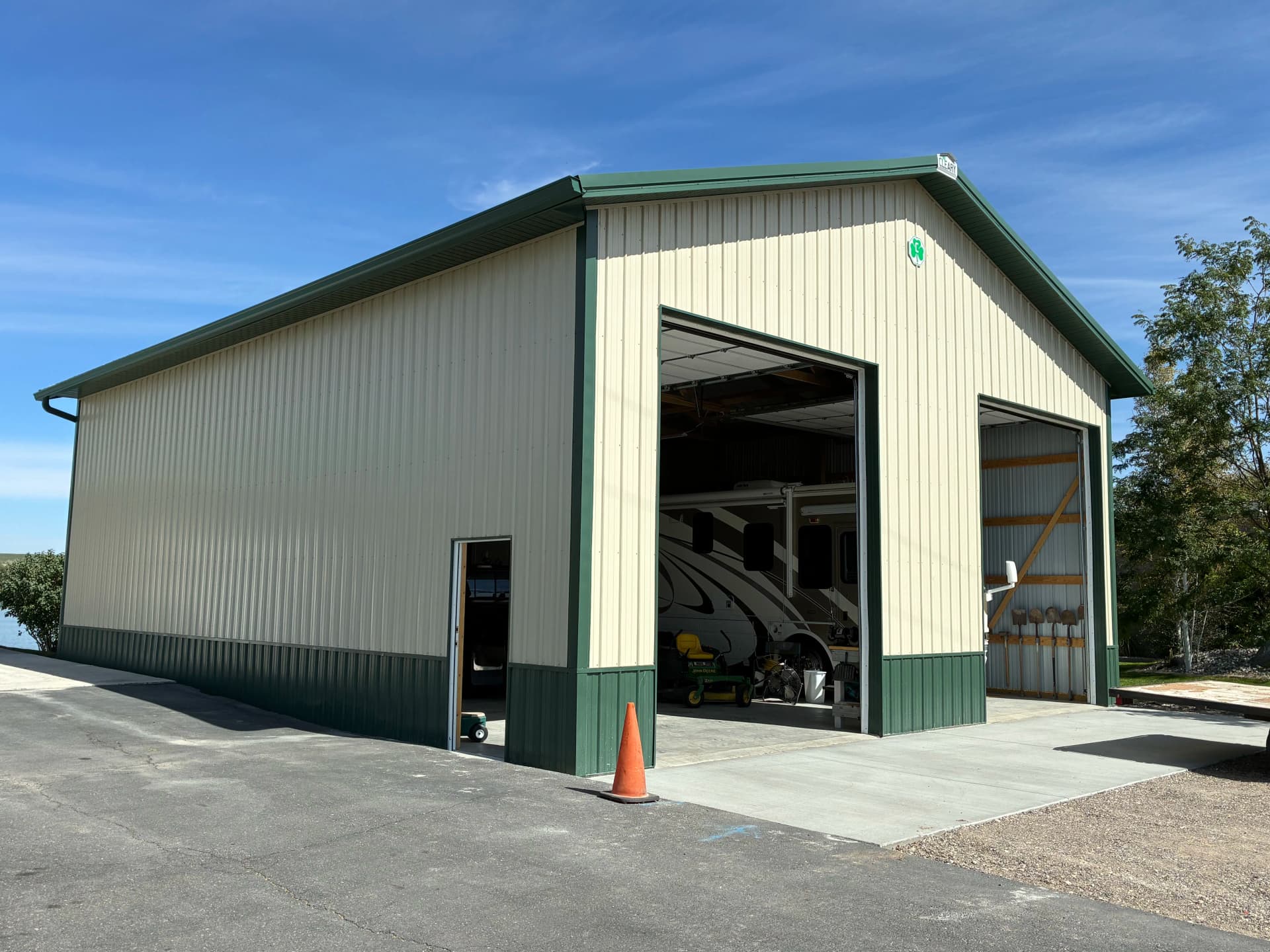
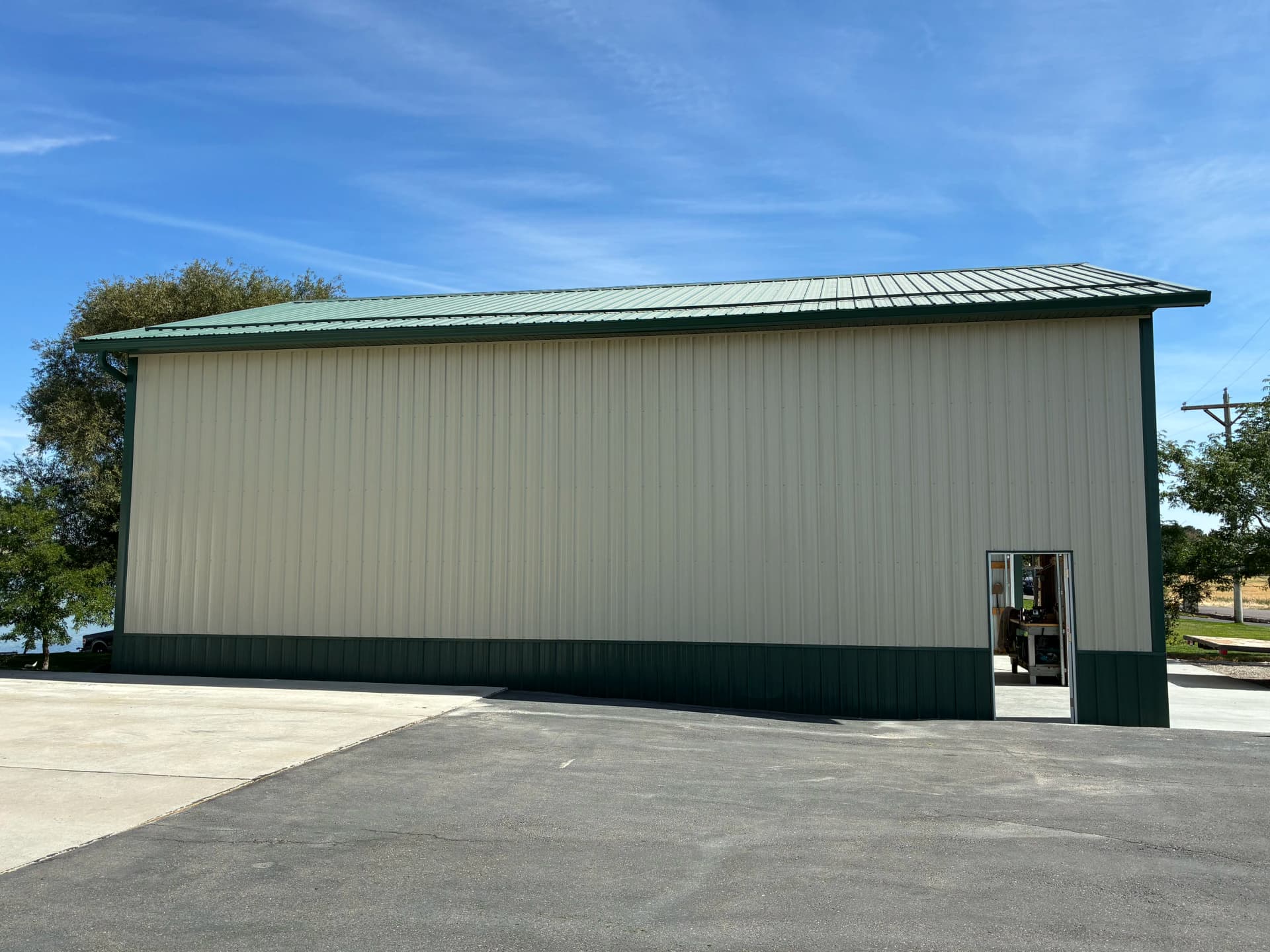
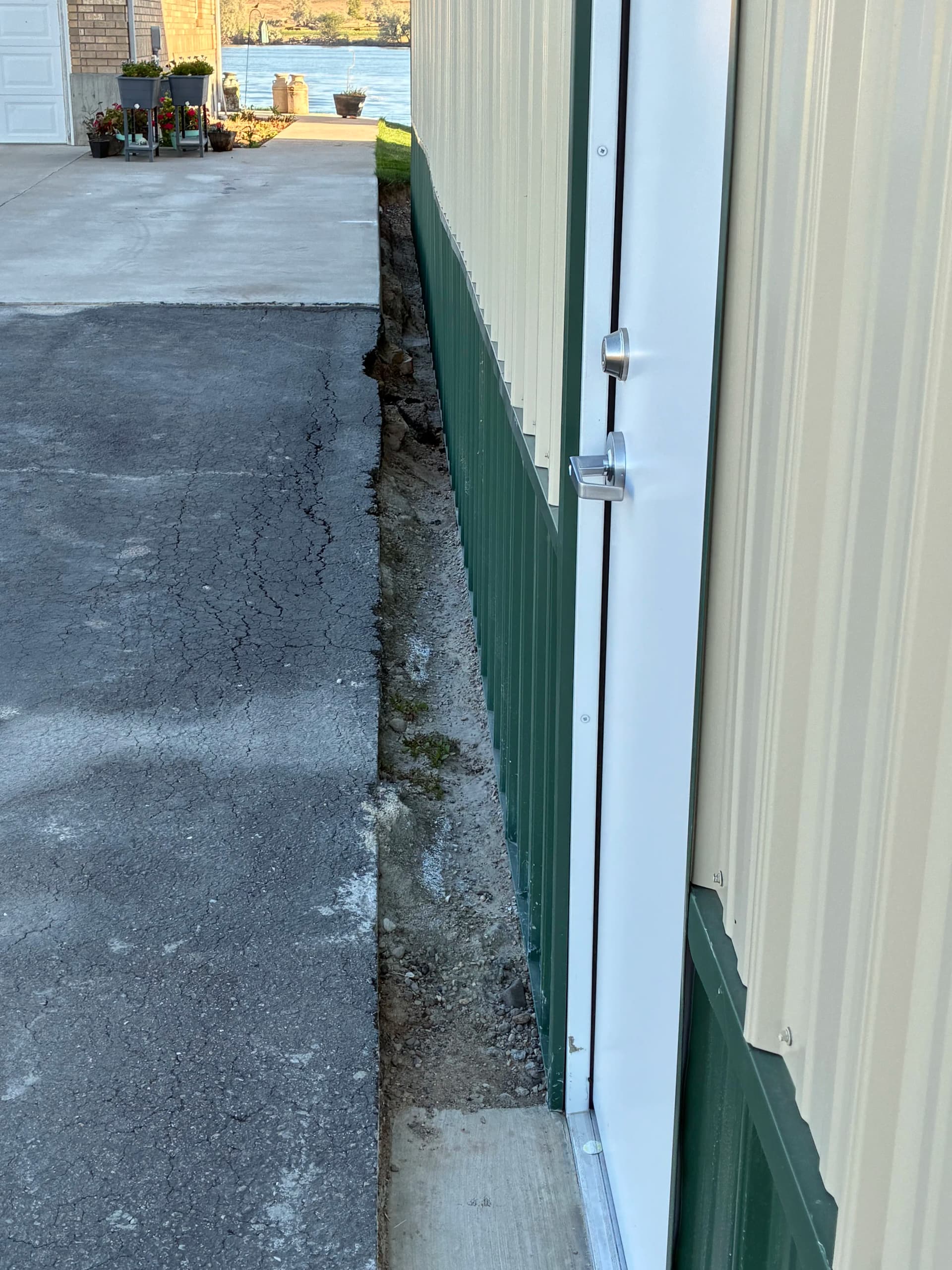
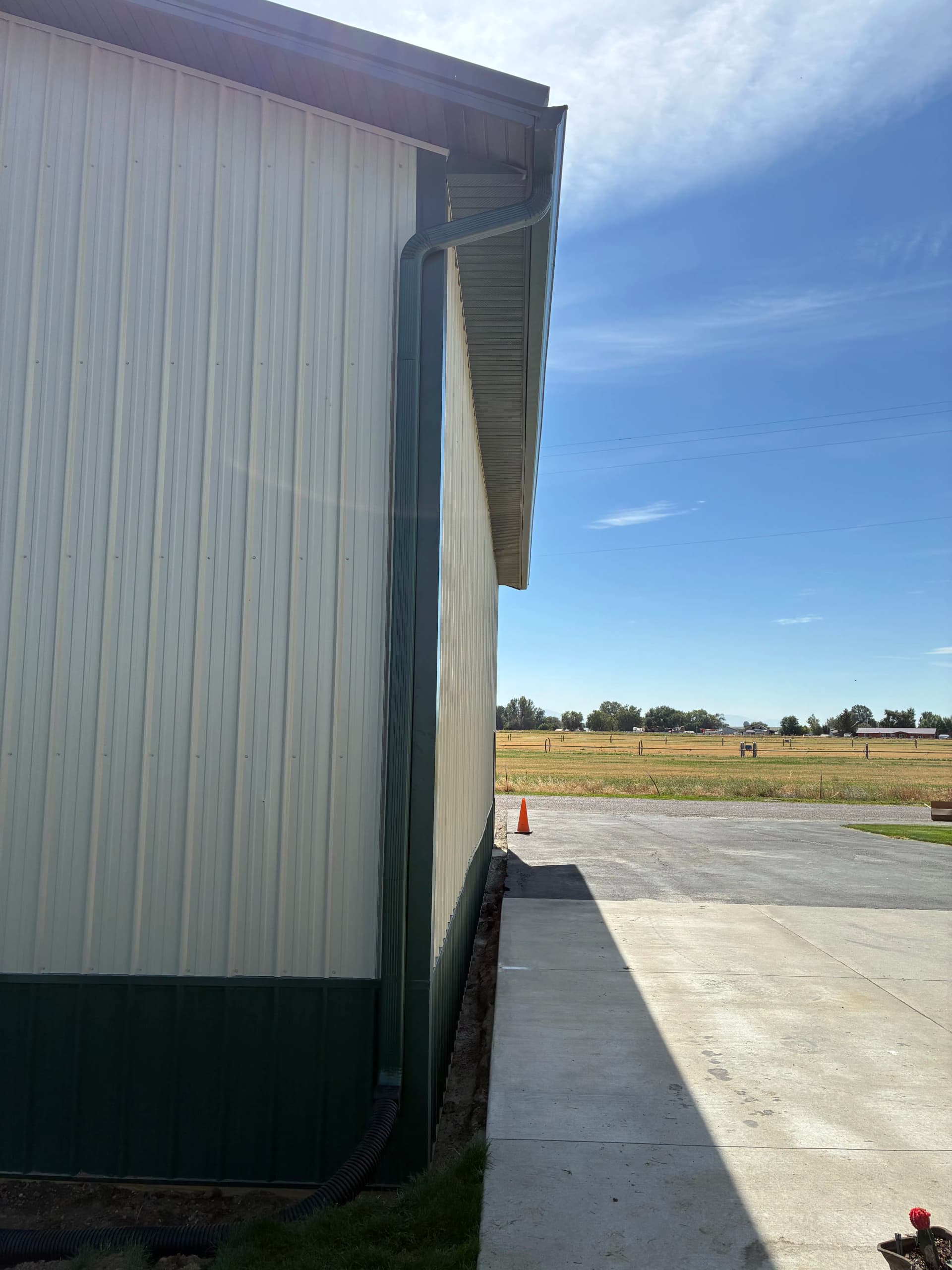
Water doesn't ask permission before it starts doing damage. On a building this size, roof runoff has a lot of momentum behind it - and if there's nothing directing it away from the base, it goes right where you don't want it: along the foundation, under the posts, into the ground beneath your slab. That's exactly what was happening here.
The cracking and erosion along the side of the building told the whole story. Water was sheeting off the roof and washing out the material right at the base. Left alone, that kind of ongoing erosion can undermine a foundation over time. The fix wasn't complicated - but it had to be done right.
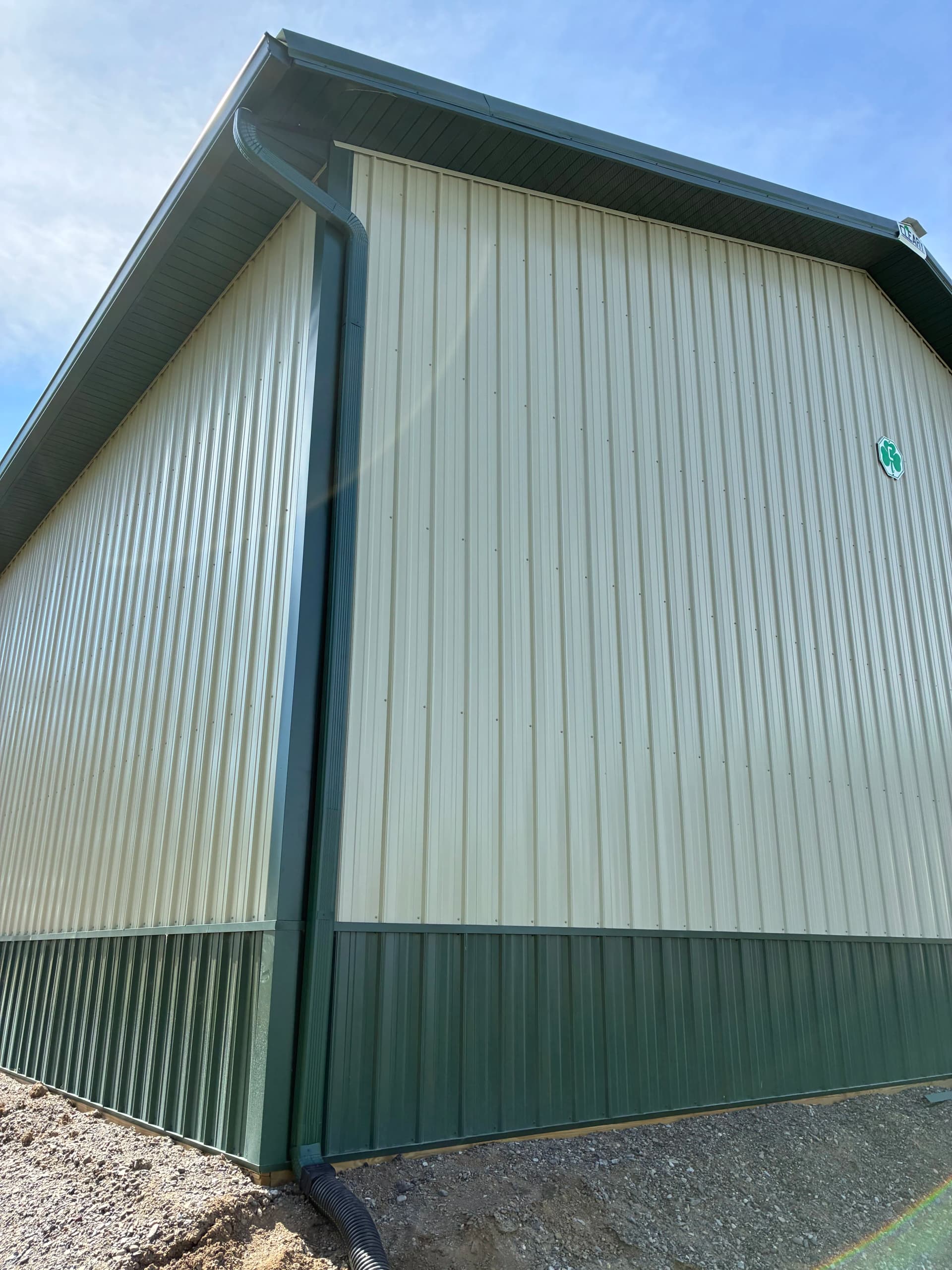
We installed 6-inch seamless gutters along the roofline with matching downspouts that route runoff well away from the building. We also added snow guards to keep heavy snow from sliding off the metal roof all at once. On a building with exposed structural posts, a sudden roof dump of snow or ice puts real stress on everything below it. The snow guards spread that load out gradually instead.
The downspouts tie into underground drainage that carries water out and away - not just off the roof and onto the ground next to the building. That's the part most people don't think about. Getting water off the roof is only half the job. Where it goes from there matters just as much.
Gutters on a pole barn or large outbuilding aren't optional if you want the structure to hold up long-term. The investment is small compared to what erosion and water infiltration can cost you down the road.